

Welcome to the latest installment of the Wednesday Wake-Up Call, a roundup of the most pressing conservation issues important to anglers. Working with our friends at Trout Unlimited, Backcountry Hunters & Anglers, the Theodore Roosevelt Conservation Partnership, The Everglades Foundation, Captains for Clean Water, VoteWater.org, Bonefish & Tarpon Trust, and Conservation Hawks (among others), we’ll make sure you’ve got the information you need to understand the issues and form solid opinions.
1. “Enormous Win for Alaska:” Statewide federal protections finalized

Late last month, the Bureau of Land Management (BLM) announced that it is finalizing protections for 28 million acres of D-1 lands across Alaska, from the Yukon-Kuskokwim, to Bristol Bay, to Eastern Alaska. 1.2 million of these acres are located in Bristol Bay. These lands are some of the best around for fishing, hunting, and recreation.
“The Department of Interior’s finalization of these protections is an enormous win for Alaska’s wild salmon, caribou, moose, and everyone who uses D1 lands for hunting, fishing, recreation, job creation, and the continuation of traditional ways of life,” said SalmonState Public Lands and Waters Lead Rachel James.
“These places represent some of the nation’s largest remaining intact ecosystems, from high alpine tundra to the pristine estuaries and wetlands in places like Bristol Bay, home to the world’s most abundant wild sockeye salmon runs,” said Emily Anderson, Alaska Director at the Wild Salmon Center. “With today’s announcement, the Secretary of Interior and the Bureau of Land Management are demonstrating their commitment to maintaining our nation’s biodiversity, climate refugia, and to listening to the communities most impacted by this decision.”
Click here to read more at SalmonState.org
2. Climate Week is September 22-29

Climate Week NYC is the largest annual climate event of its kind, bringing together over 600 events and activities across the City of New York – in person, hybrid and online. Each year, business leaders, political change makers, local decision takers and civil society representatives of all ages and backgrounds, from all over the world, gather to drive the transition, speed up progress, and champion change that is already happening.
Climate Week NYC is hosted by Climate Group, an international non-profit whose purpose is to drive climate action, fast. Climate Group hosts the official program during the week that brings together the most senior international figures from business, government, civil society and the climate sector.
This year, Climate Week NYC is being held from September 22-29, 2024, and will present a full program of some 600 events and activities. The event takes place every year in partnership with the United Nations General Assembly and is run in coordination with the United Nations and the City of New York.
Learn more at climateweeknyc.org
3. We Now Know What Caused Florida Fish to Spin in Circles until They Died
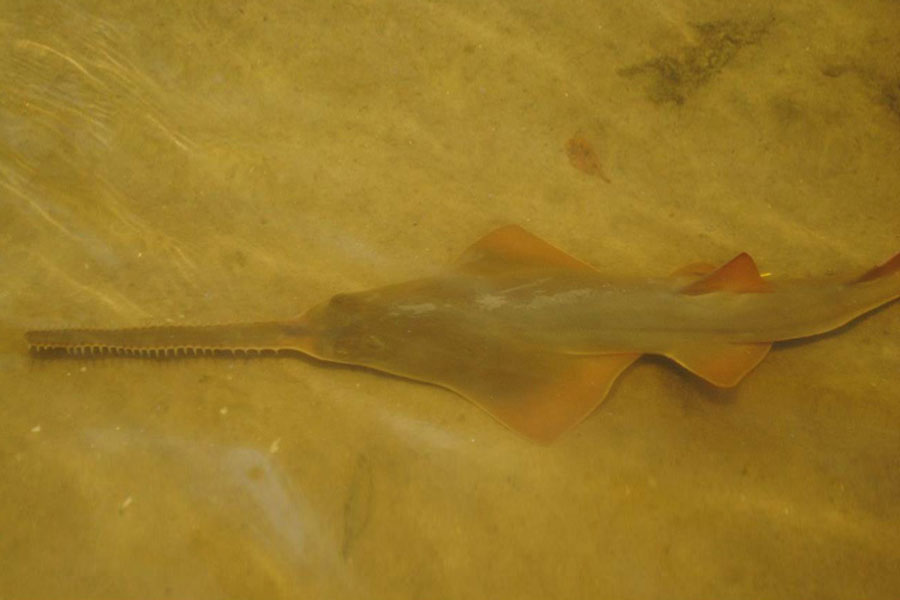
In November 2023, Florida Keys residents began observing fish and rays—including the critically endangered smalltooth sawfish—whirling in circles, usually until they died. Scientists later recorded the phenomenon in more than 80 species, including parrotfish, bull sharks, and goliath grouper.
This prompted a collaborative investigation between governmental agencies, nonprofits, universities, and more to figure out the culprit before it could set back decades of conservation efforts for the sawfish.
At least 54 of these unique rays, which sport tooth-studded saws, or rostrums, are confirmed dead—though many more likely also succumbed to the toxins, experts say. There are only around 650 breeding sawfish females in Florida.
After testing hundreds of water and fish samples, the experts concluded the symptomatic fish died from combined exposure to multiple toxins, possibly originating from multiple species of dinoflagellates, a type of microscopic algae.
Click here for the full story on nationalgeographic.com
4. The Cutthroat Trout in Jackson Hole’s Fish Creek Are Disappearing. Why?
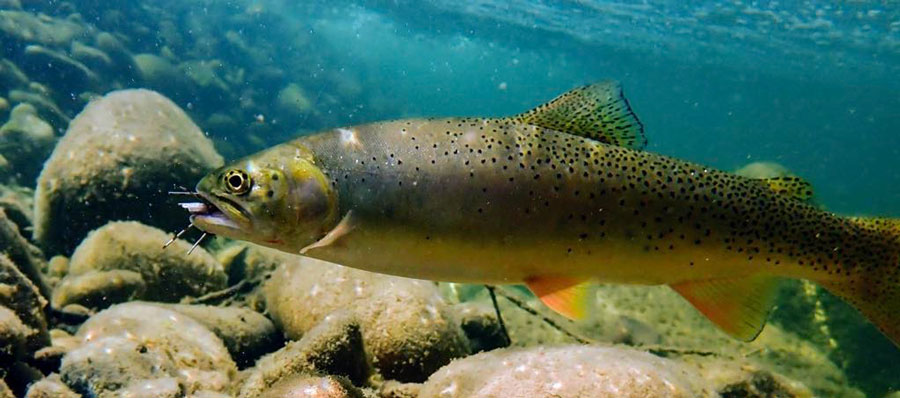
Fish Creek is a well known in Jackson Hole, even though it’s largely obscured from public view by private property as it meanders from Teton Village to a confluence with the Snake River south of Wilson. The creek is one of only two free-flowing streams in Jackson Hole that the Wyoming Department of Environmental Quality has deemed “impaired” for elevated levels of E. coli, a bacteria that indicates the water is polluted with poop. Signs have gone up warning swimmers not to float the popular stretch.
In 2023, when Wyoming Game and Fish Department biologists sampled the creek, they found very few small to medium fish — and very few fish in general. Fall counts of fish in the creek declined over 50% between 2017 and 2022. At first blush, that drop could have been an anomaly. But in 2023, the decline continued. And fish numbers fell again in last week’s survey, the first of 2024.
Now, the Wyoming DEQ is proposing to list Fish Creek as “impaired” by another pollutant: nitrogen and phosphorous-based nutrients that can help plants and algae grow but change a stream’s biology. Those nutrients can come from a number of possible sources: manure from cattle and other livestock, discharge from wastewater plants, failing septic tanks, stormwater runoff, and runoff from fertilized lawns.